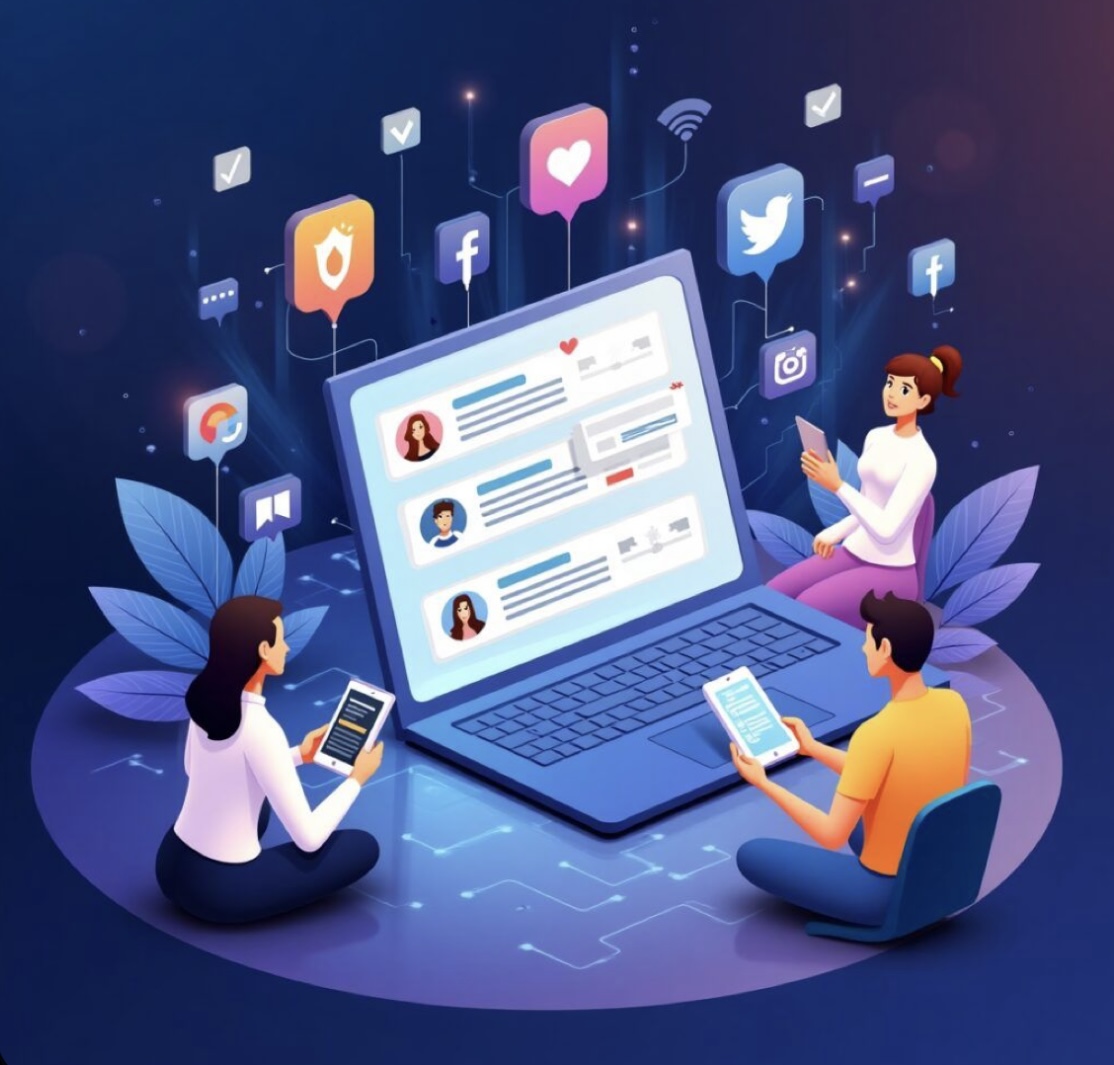
Websites and social media are both important tools for having an online presence, but they have fundamental differences and play different roles in business and personal branding.
A website is a dedicated and independent platform fully owned and controlled by an individual or business. All aspects such as content, design, structure, and information are customizable, with no restrictions imposed by third-party platforms. A website is usually considered the official reference for introducing services, products, and contact information, which increases credibility and professionalism.
In contrast, social media platforms are ready-made and public spaces that operate based on specific rules and algorithms. Although they are easier and faster to use, full control over content and audience reach is limited by the platform’s policies. Accounts can also be restricted or suspended at any time.
In terms of content longevity, website content is more permanent and easily discoverable through search engines, while social media posts have a shorter lifespan and quickly disappear among large volumes of content. For this reason, websites are far more effective for SEO and long-term audience growth.
Ultimately, the best strategy is to use both websites and social media together. A website serves as the main and official hub, while social media platforms act as complementary tools to attract users and direct them toward the website.